Introduction
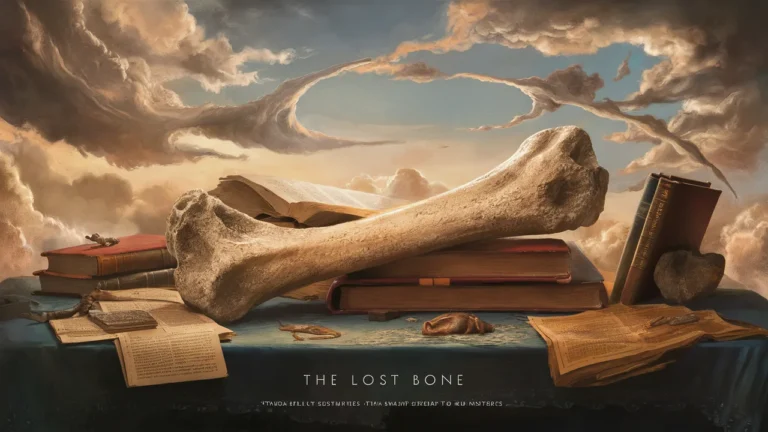
The phrase “the lost bone” carries an immediate sense of mystery. It feels unfinished, almost like the opening line of a story waiting to be told. Whether encountered in literature, symbolic discussion, folklore, archaeology, or metaphorical storytelling, the lost bone often represents something missing yet deeply important. People searching for this phrase are rarely looking for a simple definition—they want context, meaning, and explanation.
In this article, we explore the lost bone from multiple perspectives, examining how it appears in symbolism, history, storytelling, and cultural imagination. By unpacking its layered meanings, we can understand why this simple phrase continues to capture attention and spark curiosity across different fields and audiences.
What Does “The Lost Bone” Mean?
At its most basic level, the lost bone refers to something physical that has gone missing. However, the phrase rarely remains literal for long. In many contexts, it becomes symbolic, representing a missing link, forgotten truth, or essential piece of a larger whole. Much like a puzzle missing one final piece, the lost bone suggests incompleteness and unresolved tension.
This dual nature—both literal and metaphorical—gives the phrase its power. It can describe an actual object lost to time or serve as a narrative device that keeps people searching for answers.
The Lost Bone as a Symbol
Symbolically, the lost bone often represents lost knowledge, buried memory, or overlooked importance. Bones are associated with structure, foundation, and survival. When a bone is lost, something fundamental is missing. This symbolism appears frequently in storytelling, where the lost bone may stand for a truth that has been ignored or a key realization yet to be discovered.
In psychological or philosophical discussions, the lost bone can represent unresolved issues or suppressed experiences—things that shape behavior even when they remain unseen.
The Lost Bone in History and Archaeology
In archaeology, the idea of the lost bone takes on literal significance. A missing bone can change historical understanding entirely. Fossil records, burial sites, and skeletal remains often depend on complete structures to interpret age, movement, or cause of death. When a bone is lost, conclusions become uncertain, opening space for debate and reinterpretation.
These gaps remind historians and scientists that history is often reconstructed from fragments. The lost bone becomes a symbol of what we still don’t know—and what we may never fully recover.
The Lost Bone in Storytelling and Literature
In literature and storytelling, the lost bone often acts as a narrative catalyst. It may be the object of a search, the clue that drives a mystery forward, or the missing element that explains everything once found. Writers use this concept to create suspense and emotional investment, encouraging readers to follow the journey toward resolution.
The lost bone works particularly well in mystery, fantasy, and allegorical stories, where discovery represents growth, truth, or closure.
Cultural Interpretations of the Lost Bone
Across cultures, bones have long been associated with ancestry, identity, and continuity. A lost bone can symbolize broken lineage or forgotten heritage. In some traditions, bones are sacred, believed to carry spiritual energy or memory. Losing one is not merely physical—it’s deeply emotional and symbolic.
This cultural weight explains why the phrase resonates even without context. It taps into shared human ideas about loss, remembrance, and restoration.
The Lost Bone as a Metaphor in Modern Life
In everyday language, the lost bone can be used metaphorically to describe missing opportunities, overlooked details, or unresolved personal struggles. People often feel something is “off” without knowing exactly what’s missing. The lost bone becomes a way to articulate that feeling.
This metaphor resonates strongly in modern storytelling, self-reflection, and even business or creative problem-solving discussions, where identifying the “missing piece” is key to success.
Why the Lost Bone Captures Human Curiosity
Humans are naturally drawn to incomplete stories. The lost bone represents a question without an answer, and curiosity thrives in that space. We want to find it, understand it, and restore balance. This psychological pull explains why the phrase performs well in search queries and storytelling alike.
The simplicity of the phrase allows readers to project their own meaning onto it, making it universally relatable.
Modern Uses of the Phrase “The Lost Bone”
Today, the phrase appears in book titles, creative projects, metaphors, and online discussions. Its ambiguity is its strength—it adapts to context without losing impact. Whether used literally or symbolically, it invites exploration and interpretation.
As digital content continues to favor emotionally engaging and curiosity-driven language, phrases like the lost bone remain powerful tools for communication.
Why “The Lost Bone” Works as an SEO Topic
From an SEO perspective, the lost bone performs well because it combines mystery with clarity. It’s short, memorable, and open-ended, encouraging longer engagement and deeper reading. Articles that explore its meaning thoroughly satisfy user intent while remaining evergreen.
Search engines favor content that answers curiosity clearly, and this topic offers ample opportunity for depth without relying on fleeting trends.
Conclusion
The phrase “the lost bone” may be simple, but its meaning is anything but. Whether viewed through the lens of symbolism, history, storytelling, or modern metaphor, it represents something essential that has gone missing—and the human desire to recover it. That sense of absence fuels curiosity, creativity, and reflection.
By exploring the lost bone in depth, we gain insight not only into language and culture, but into ourselves. It reminds us that sometimes, understanding what’s missing is just as important as understanding what’s present.